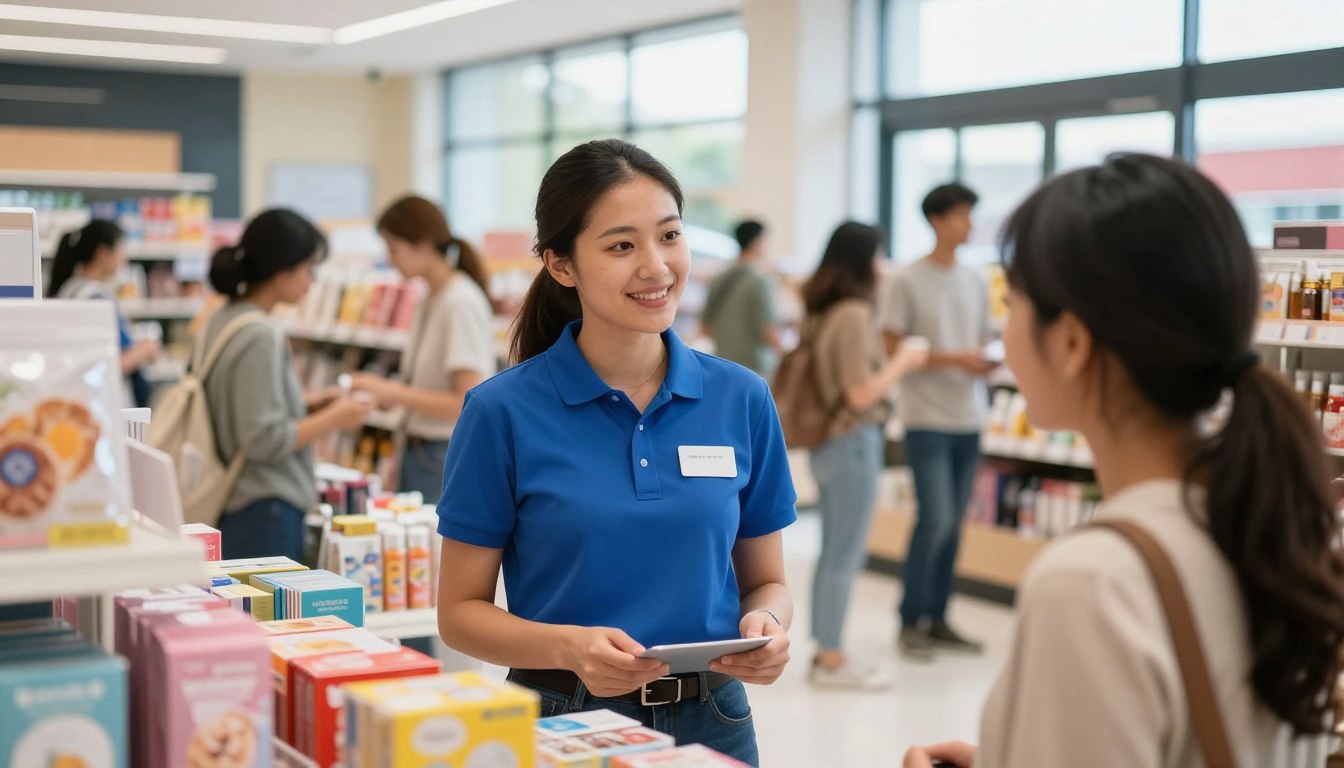
Stepping into a career within the vibrant world of commerce offers more than just a paycheck. Many people discover that being a retail worker provides a unique chance to build essential communication skills while meeting diverse individuals every day.
Whether you are greeting customers or organizing displays, every task helps you grow professionally. Finding the right retail associate position can turn a simple job into a long-term passion for service and sales excellence.

Key Takeaways
- Gain valuable interpersonal skills through daily customer interactions.
- Enjoy flexible scheduling options that accommodate your personal life.
- Discover clear paths for career advancement within the industry.
- Build a professional network by engaging with diverse teams.
- Experience the satisfaction of helping customers find exactly what they need.
Understanding the Landscape of the Retail Worker (shops, malls)
As the retail sector continues to evolve, understanding its current landscape is crucial for those looking to start or advance their careers as sales associates or store employees. The retail industry is a dynamic and multifaceted field that encompasses a wide range of roles and environments, from boutique shops to large malls.

The Evolution of Modern Retail Environments
The modern retail environment has undergone significant changes, driven by technological advancements, shifting consumer behaviors, and the rise of e-commerce. Today, sales associates and store employees are expected to be adept at using technology, providing exceptional customer service, and creating engaging in-store experiences.
Retail environments have become more sophisticated, incorporating elements like digital signage, mobile payments, and personalized marketing. This evolution has transformed the role of retail workers, who must now be versatile and knowledgeable about products, services, and technologies.
Why Retail Remains a Vital Career Path in the U.S.
Despite the challenges faced by the retail industry, it remains a vital career path in the U.S., offering a wide range of opportunities for employment and advancement. Retail workers are the backbone of the industry, providing essential services that drive sales, enhance customer experiences, and build brand loyalty.
For those interested in pursuing a career in retail, there are numerous benefits, including flexible scheduling, opportunities for professional growth, and the chance to develop valuable skills in customer service, sales, and management. As the retail landscape continues to evolve, the demand for skilled and adaptable sales associates and store employees will remain strong.
Identifying Your Strengths as a Retail Associate
To excel as a customer service representative or cashier, it’s essential to identify the skills and personality traits that make you a strong candidate. Understanding your strengths not only enhances your job performance but also contributes to a more satisfying career in retail.
Retail is a diverse field, encompassing various roles that cater to different personalities and skill sets. For instance, some individuals thrive in fast-paced environments like malls, while others prefer the intimate setting of boutique shops. Recognizing where your strengths lie can guide you towards the most suitable retail environment.
Assessing Interpersonal and Communication Skills
Interpersonal and communication skills are foundational for success in retail. As a retail associate, you will interact with customers, colleagues, and management daily. Being able to communicate effectively, empathize with customers, and work collaboratively with your team are crucial skills.
To assess your interpersonal and communication skills, consider the following:
- Your ability to listen actively and respond appropriately to customer inquiries.
- Your comfort level with public speaking and addressing customer concerns.
- Your capacity to work in a team environment and support your colleagues during busy periods.

Matching Personality Types to Specific Retail Roles
Different retail roles require different personality types. For example, a customer service representative needs to be patient, empathetic, and communicative. On the other hand, a sales associate in a boutique might need to be more fashion-forward and able to provide personalized recommendations.
| Retail Role | Key Personality Traits |
|---|---|
| Customer Service Representative | Patience, Empathy, Strong Communication |
| Sales Associate in a Boutique | Fashion Awareness, Personalized Service, Attention to Detail |
| Cashier | Accuracy, Efficiency, Friendly Demeanor |
By understanding your strengths and matching them to the right retail role, you can significantly enhance your job satisfaction and performance. Whether you’re considering a role as a cashier or a customer service representative, identifying your strengths is the first step towards a rewarding career in retail.
Researching Top Retail Employers in the United States
Knowing the top retail employers in the United States is a vital step for anyone looking to start or advance their career in retail. The retail industry is vast and varied, offering numerous opportunities for mall workers and shop assistants across different types of establishments.
To make an informed decision, it’s crucial to delve into the specifics of potential employers. This involves not just looking at the company’s reputation but also understanding its culture and what current or former employees have to say.
Evaluating Company Culture and Employee Reviews
Company culture plays a significant role in job satisfaction. When researching top retail employers, it’s essential to evaluate the work environment they offer. Websites like Glassdoor and Indeed provide valuable insights into company culture through employee reviews.
These reviews can highlight aspects such as management style, opportunities for advancement, and overall work-life balance. For instance, a mall worker might prioritize a company that offers flexible scheduling, while a shop assistant might look for a company with a strong training program.

| Company | Average Rating | Employee Reviews |
|---|---|---|
| Macy’s | 3.5/5 | Over 10,000 reviews highlighting mixed experiences with management and opportunities for advancement. |
| Target | 4.0/5 | Praised for its positive work environment and employee benefits. |
| Nordstrom | 4.2/5 | Noted for its supportive culture and opportunities for career growth. |
Focusing on National Chains Versus Local Boutiques
Another critical consideration is whether to apply to national retail chains or local boutiques. National chains like Walmart and Target offer the advantage of brand recognition and often have more resources available for employee training and development.
On the other hand, local boutiques provide a unique, personalized shopping experience and may offer a more intimate work environment. The choice between the two often depends on personal preference and career goals.
- National Chains: Known for structured training programs and clear career progression paths.
- Local Boutiques: Offer a more personalized work experience and the opportunity to be closely involved in store operations.
By carefully evaluating company culture, employee reviews, and the type of retail environment, job seekers can make informed decisions about where to apply and potentially build a fulfilling career as a mall worker or shop assistant.
Crafting a Standout Resume for Mall and Shop Positions
A standout resume is your ticket to securing an interview for your desired retail role. In a competitive job market, it’s essential to showcase your skills and experience in a clear and concise manner.
To create an effective retail resume, focus on highlighting your relevant experience and skills that align with the job description. This will not only grab the attention of hiring managers but also help your resume pass through applicant tracking systems (ATS).
Highlighting Relevant Customer Service Experience
Customer service is a crucial aspect of any retail job. When crafting your resume, emphasize your customer service experience by including specific examples of times when you provided excellent service, handled customer complaints, or exceeded sales targets.
For instance, you could mention a situation where you “resolved a customer complaint by offering a personalized solution, resulting in a positive review and repeat business.” Such examples demonstrate your ability to handle challenging situations and provide a positive customer experience.
“The way to get started is to quit talking and begin doing.” – Walt Disney
Using action verbs like “resolved,” “managed,” and “created” can help you describe your customer service experience in a compelling way. Additionally, quantifying your achievements by including numbers or percentages can make your resume more impactful.

Tailoring Your Resume for Applicant Tracking Systems
Many retailers use ATS to streamline their hiring process. To ensure your resume passes through these systems, incorporate relevant keywords from the job description and use a clear, concise format.
For example, if a job posting mentions “sales associate” and “customer service,” make sure to include these terms in your resume, especially in your summary and skills section. This will help your resume match the job requirements and increase its visibility to hiring managers.
- Use a standard font, such as Arial or Calibri, and a font size between 10 and 12 points.
- Save your resume in a .docx or .pdf format to ensure compatibility with most ATS.
- Avoid using images, charts, or tables, as they can be difficult for ATS to parse.
By tailoring your resume to the specific job and using relevant keywords, you can increase your chances of getting noticed by hiring managers and securing an interview.
Mastering the Art of the Retail Job Interview
Preparing for a retail job interview involves more than just reviewing common questions; it demands a strategic approach to showcasing one’s strengths. To excel, candidates must be ready to demonstrate their skills and experience in a way that resonates with potential employers.
Preparing for Common Behavioral Questions
Retail interviews often include behavioral questions designed to assess a candidate’s past experiences and predict future performance. To tackle these effectively, candidates should prepare examples that highlight their customer service skills, problem-solving abilities, and teamwork experiences.
For instance, a candidate might be asked, “Tell me about a time when you had to handle a difficult customer.” A strong response would involve a specific story that demonstrates empathy, conflict resolution skills, and a positive outcome. Using the STAR method (Situation, Task, Action, Result) can help structure such responses effectively.
Here are some common behavioral questions and tips for answering them:
- Describe a situation where you went above and beyond for a customer. Focus on the actions you took and the positive impact on the customer.
- How do you handle working in a fast-paced environment? Highlight your ability to multitask, stay organized, and maintain a positive attitude under pressure.
Demonstrating Enthusiasm and Professionalism
Beyond answering questions correctly, demonstrating genuine enthusiasm for the role and the company is crucial. Candidates should research the company’s values, products, and mission to show their interest and knowledge.
A table summarizing key aspects to demonstrate enthusiasm and professionalism:
| Aspect | Demonstration | Example |
|---|---|---|
| Knowledge of Company | Research on company’s history, mission, and values | Mentioning a recent company initiative and how it aligns with your own values. |
| Professional Attire | Dressing appropriately for the interview | Wearing attire that reflects the company’s dress code or slightly more formal. |
| Positive Attitude | Showing eagerness and positivity during the interview | Expressing excitement about the role and the company culture. |
By focusing on these areas, candidates can significantly improve their chances of acing a retail job interview and securing a position as a retail associate or customer service representative.
Navigating the Differences Between Boutique Shops and Large Malls
Boutique shops and large malls offer distinct retail experiences that cater to different consumer preferences and employee work styles. This difference is crucial for store employees and mall workers to understand as they navigate their careers in retail.
The retail environment can significantly influence job satisfaction and performance. While some employees thrive in the personalized atmosphere of boutique shops, others prefer the fast-paced and dynamic environment of large malls.
The Pace and Atmosphere of Independent Shops
Independent or boutique shops are known for their unique and often personalized shopping experiences. These stores usually have a more relaxed pace, allowing store employees to build strong relationships with customers and provide tailored service.
The atmosphere in boutique shops is often curated to reflect the brand’s identity or the owner’s vision, creating a distinctive environment that attracts a specific clientele.
The Dynamic Environment of Regional Shopping Malls
On the other hand, regional shopping malls are bustling hubs of activity, with a diverse range of stores, dining options, and entertainment. Mall workers in these environments must be adaptable and able to handle a high volume of customers, often during peak seasons.
The dynamic nature of large malls means that employees may have to juggle multiple tasks, from customer service to sales and inventory management, making it a challenging yet rewarding work environment.
| Aspect | Boutique Shops | Large Malls |
|---|---|---|
| Atmosphere | Personalized, relaxed | Bustling, dynamic |
| Customer Interaction | Strong, personalized service | Diverse, fast-paced interactions |
| Employee Role | Focused on customer relationships | Multitasking, various responsibilities |
Essential Skills for a Successful Sales Associate
Becoming a proficient sales associate involves developing key skills that not only improve customer experience but also contribute to the overall success of the retail environment. A sales associate is often the face of the store, making their role pivotal in shaping customer perceptions and driving sales.
The skills required to excel in this role are multifaceted, ranging from product knowledge to effective communication and sales techniques. Let’s delve into the essential skills that can make a sales associate successful.
Developing Product Knowledge and Expertise
Having a deep understanding of the products is crucial for a sales associate. This involves not just knowing the features and benefits of the products but also being aware of the latest trends and updates in the market.
- Product Training: Regular training sessions can help sales associates stay updated on new products and technologies.
- Continuous Learning: Encouraging a culture of continuous learning can help associates stay ahead of the curve.
- Hands-on Experience: Allowing sales associates to experience products firsthand can enhance their knowledge and confidence.
By developing product knowledge and expertise, sales associates can effectively address customer queries, provide personalized recommendations, and ultimately drive sales.
Techniques for Effective Upselling and Cross-selling
Upselling and cross-selling are critical techniques that can significantly impact sales performance. These techniques involve suggesting additional products or services to customers based on their needs and preferences.
- Understanding Customer Needs: The first step in effective upselling and cross-selling is to understand the customer’s needs and preferences.
- Personalized Recommendations: Providing personalized recommendations based on customer behavior and purchase history can enhance the shopping experience.
- Highlighting Product Benefits: Clearly communicating the benefits and value of additional products or services can persuade customers to make additional purchases.
By mastering these techniques, sales associates can not only increase average transaction values but also improve customer satisfaction by providing them with relevant and useful recommendations.
The Daily Responsibilities of a Store Employee
The role of a store employee encompasses a variety of tasks that are essential for the smooth operation of retail establishments. As a retail worker, one must be versatile and capable of handling multiple responsibilities to ensure a positive shopping experience for customers.
One of the critical aspects of a store employee’s daily responsibilities is managing inventory. This involves receiving and stocking merchandise, tracking inventory levels, and reporting any discrepancies or issues to management. Effective inventory management is crucial for maintaining the right stock levels and preventing stockouts or overstocking.
Managing Inventory and Visual Merchandising
Managing inventory is not just about stocking shelves; it’s also about presenting products in an appealing manner. Visual merchandising plays a significant role in attracting customers and driving sales. Store employees are responsible for creating visually appealing displays and ensuring that the store’s layout is inviting and easy to navigate.
To achieve this, employees must be knowledgeable about the products they are selling. This includes understanding product features, benefits, and how they can be used to meet customer needs. By effectively merchandising products, store employees can enhance the shopping experience and encourage customers to make purchases.
Maintaining Store Standards and Cleanliness
Maintaining high standards of cleanliness and organization is another key responsibility of store employees. This includes ensuring that the store is tidy, products are properly displayed, and fitting rooms are clean and well-maintained. A clean and organized store environment not only enhances the shopping experience but also reflects positively on the brand.
Store employees must also adhere to company standards for store appearance and customer service. This involves following guidelines for dressing, behavior, and interaction with customers. By maintaining these standards, employees contribute to a consistent brand image and help build customer trust and loyalty.
In conclusion, the daily responsibilities of a store employee are diverse and critical to the success of retail operations. By effectively managing inventory, visual merchandising, and maintaining store standards, store employees play a vital role in delivering a positive shopping experience and driving sales.
Advancing Your Career from Cashier to Management
For retail associates aiming to climb the career ladder, transitioning from cashier to management involves a combination of skill development and strategic planning. Understanding the requirements and responsibilities of managerial roles is crucial for a successful transition.
Setting Goals for Professional Growth
Setting clear, achievable goals is the first step towards career advancement in retail. Retail associates should identify areas for improvement and development, such as leadership skills, customer service expertise, and operational knowledge.
A well-structured plan can help in achieving these goals. This includes:
- Seeking mentorship from experienced managers
- Participating in training and development programs
- Volunteering for additional responsibilities
Taking Initiative in Leadership Tasks
Taking initiative is key to demonstrating leadership potential. Retail associates can start by leading small projects or teams, such as visual merchandising, inventory management, or customer service initiatives.
A table outlining key leadership tasks and their benefits is provided below:
| Leadership Task | Description | Benefit |
|---|---|---|
| Visual Merchandising | Creating attractive store displays | Enhances customer experience and sales |
| Inventory Management | Overseeing stock levels and ordering | Reduces stockouts and overstocking |
| Customer Service Initiatives | Developing strategies to improve customer satisfaction | Increases customer loyalty and retention |
By focusing on professional growth and taking on leadership tasks, retail associates can effectively advance their careers from cashier to management roles.
Leveraging Technology in Modern Retail Environments
Leveraging technology is no longer a choice but a necessity for retail workers in modern environments. The retail industry has seen a significant shift towards technology integration, impacting various aspects of store operations.
One of the critical areas where technology has made a substantial impact is in point-of-sale (POS) systems. Modern POS systems are more than just cash registers; they are comprehensive tools that manage sales, track inventory, and analyze customer data.
Adapting to Point-of-Sale Systems
Adapting to POS systems is essential for store employees to efficiently process transactions and manage sales data. These systems often include features such as inventory management, customer loyalty programs, and sales reporting.
For instance, a retail worker using a POS system can quickly identify best-selling products, manage discounts, and process various payment methods. This not only enhances the customer experience but also streamlines store operations.
Utilizing Digital Tools for Inventory Management
Digital tools have revolutionized inventory management in retail. These tools enable store employees to track stock levels in real-time, automate reordering processes, and minimize stock discrepancies.
Effective inventory management is crucial for maintaining the right stock levels, reducing waste, and ensuring that customers can find the products they need. Digital tools provide real-time data, enabling retail workers to make informed decisions.
| Inventory Management Feature | Description | Benefit |
|---|---|---|
| Real-time Tracking | Monitors stock levels as they change | Reduces stockouts and overstocking |
| Automated Reordering | Generates orders based on stock levels | Saves time and reduces manual errors |
| Stock Discrepancy Alerts | Notifies staff of inventory discrepancies | Helps maintain accurate stock levels |
By embracing technology, retail workers can significantly improve their efficiency and contribute to a better shopping experience for customers.
Building Strong Relationships as a Customer Service Representative
Building strong relationships with customers is a key aspect of being a successful customer service representative in today’s competitive retail landscape. This involves not only providing excellent service but also understanding the needs and preferences of customers to offer personalized experiences.
As a customer service representative, one must be adept at handling a variety of customer interactions, from routine inquiries to complex complaints. The ability to remain composed and professional, even in challenging situations, is crucial.
Handling Difficult Customer Interactions with Grace
Dealing with difficult customers requires a combination of empathy, patience, and effective communication skills. It’s essential to listen actively to their concerns and respond in a manner that acknowledges their feelings and addresses their issues.
Some strategies for handling difficult customer interactions include:
- Remaining calm and composed under pressure
- Empathizing with the customer’s situation
- Offering solutions or alternatives to resolve the issue
- Following up to ensure customer satisfaction
Creating Memorable Shopping Experiences
Creating memorable shopping experiences is about going beyond the expected level of service to make a lasting impression on customers. This can be achieved through personalized recommendations, attentive service, and a thorough knowledge of the products or services offered.
Sales associates can create memorable experiences by:
- Engaging with customers to understand their needs and preferences
- Providing tailored recommendations and solutions
- Ensuring a seamless shopping experience across all touchpoints
By focusing on building strong relationships and creating memorable shopping experiences, customer service representatives can significantly enhance customer loyalty and drive repeat business.
Managing Stress and Maintaining Energy in High-Traffic Malls
The fast-paced environment of a busy mall demands a unique blend of physical stamina and mental toughness from its retail associates. As a mall worker, one must be able to manage stress effectively while maintaining the energy to provide excellent customer service throughout their shift.
To achieve this, retail associates can employ several strategies. Firstly, staying hydrated and energized is crucial. Drinking plenty of water and having healthy snacks can help maintain energy levels.
Staying Active During Long Shifts
Staying active during long shifts is vital for maintaining energy and reducing the risk of fatigue. Here are some strategies that can help:
- Take short breaks to stretch or move around when possible.
- Engage in physical activities during breaks, such as a short walk.
- Maintain good posture to reduce physical strain.
As noted by a retail expert,
“Staying active is not just about physical health; it’s also about mental well-being. When retail associates are active, they are more alert and better equipped to handle customer demands.”
Balancing Peak Season Demands
Peak seasons can be particularly challenging for mall workers. To balance the demands of peak seasons, consider the following:
| Strategy | Description | Benefits |
|---|---|---|
| Prioritize tasks | Focus on the most critical tasks during peak periods. | Reduces stress, improves efficiency |
| Team coordination | Work closely with team members to distribute workload. | Enhances teamwork, reduces individual burden |
| Self-care | Ensure adequate rest and nutrition during peak seasons. | Maintains energy levels, supports overall well-being |
By implementing these strategies, retail associates can better manage stress and maintain their energy levels, even during the most demanding periods.
Understanding Compensation and Benefits for Mall Workers
When considering a career as a mall worker or shop assistant, understanding the compensation and benefits is crucial. Mall workers and shop assistants are the backbone of retail environments, and their compensation reflects the value they bring to their employers.
The compensation for mall workers can vary widely based on factors such as the size of the mall, the type of store, and the specific role within the store. Generally, mall workers can expect a mix of hourly wages and, in some cases, commission-based incentives.
Navigating Hourly Wages and Commission Structures
Hourly wages for mall workers are typically competitive with the local minimum wage or slightly higher, depending on the employer and the worker’s experience. Some retail positions, especially those in sales, may offer commission structures that allow workers to earn additional income based on their sales performance.
For instance, a sales associate in a clothing store might earn a base hourly wage plus a percentage of the sales they generate. This commission structure can significantly boost a worker’s earnings, especially during peak shopping seasons.
Exploring Employee Discounts and Health Benefits
Beyond hourly wages and commissions, many retailers offer employee discounts on their products or services. This benefit allows mall workers to enjoy the products they help sell at a discounted rate, which can be a significant perk.
Some larger retail chains and malls also offer health benefits to their full-time employees. These benefits can include medical, dental, and vision coverage, contributing to the overall well-being of the workers.
It’s essential for prospective mall workers to inquire about the specific benefits offered by their potential employer, as these can vary widely. Understanding the full scope of the compensation and benefits package can help workers make informed decisions about their career paths.
Networking Strategies for Finding Hidden Retail Opportunities
Beyond traditional job boards, networking offers a powerful means to discover hidden retail opportunities. For retail workers and customer service representatives, making connections within the industry can lead to job openings that are not publicly advertised. Effective networking can be the key to securing a role in a competitive job market.
Direct Connections with Store Managers
One of the most effective networking strategies is connecting directly with store managers. This approach allows job seekers to make a personal impression and demonstrate their enthusiasm for the role and the company. Visiting stores, introducing oneself, and inquiring about potential opportunities can sometimes lead to interviews or even job offers on the spot.
Tips for Connecting with Store Managers:
- Research the store and its management team beforehand to show interest and knowledge.
- Prepare a concise and professional introduction that highlights relevant experience.
- Be respectful of the manager’s time and consider visiting during less busy hours.
Utilizing Online Platforms
In today’s digital age, online platforms are invaluable for job seekers. Utilizing job alert features on professional networking sites can provide timely notifications about new job openings. Additionally, engaging with retail industry groups and forums can offer insights into companies that are hiring.
Popular Online Platforms for Retail Job Seekers:
- LinkedIn: Utilize job search features and join relevant retail groups.
- Industry-specific job boards: Many retail companies list their job openings on specialized job boards.
- Company websites: Often, companies list their job openings on their own websites before advertising them elsewhere.
Conclusion
As the retail landscape continues to evolve, opportunities abound for individuals seeking a career as a retail associate or sales associate. By understanding the modern retail environment, identifying personal strengths, and developing essential skills, job seekers can position themselves for success in this dynamic field.
A career in retail offers more than just a job; it provides a chance to build meaningful relationships with customers, work in a fast-paced environment, and advance professionally. Whether working in a boutique shop or a large mall, retail associates and sales associates play a vital role in creating memorable shopping experiences.
By mastering the skills outlined in this article, individuals can thrive in their roles and take advantage of the many opportunities available in the retail sector. As the industry continues to adapt to changing consumer needs, the demand for skilled and dedicated retail professionals will remain strong.
FAQ
What makes being a retail worker at a major destination like The Grove in Los Angeles so rewarding?
A retail worker in a high-traffic environment enjoys a vibrant atmosphere where no two days are the same. They benefit from building diverse interpersonal skills and often receive competitive perks. Working at iconic locations allows a store employee to be at the heart of consumer trends while developing a professional network that spans across various industries.
How can a retail associate determine if they are better suited for a luxury boutique or a large national chain?
A retail associate should assess their preference for pace and customer depth. Those who enjoy building long-term, one-on-one relationships may thrive as a shop assistant in an intimate boutique setting like those found on Rodeo Drive. Conversely, those who prefer a fast-paced, high-volume environment with structured corporate ladders may find more success at national giants like Target or Best Buy.
Which major U.S. retailers are known for having the best company culture for a sales associate?
Companies such as Costco, REI, and The Container Store are frequently recognized for their excellent treatment of every sales associate. These brands often prioritize employee well-being, offer robust training programs, and maintain high glassdoor ratings, ensuring that a store employee feels valued and supported in their career growth.
What should a shop assistant highlight on their resume to pass through automated screening systems?
A shop assistant should focus on including specific keywords like “customer satisfaction,” “inventory management,” and “POS systems.” It is vital to highlight quantifiable achievements, such as “exceeded monthly sales goals by 15%,” to catch the eye of recruiters at companies like Macy’s or H&M who use Applicant Tracking Systems (ATS) to filter candidates.
How can a store employee demonstrate professionalism during an interview for a position at Mall of America?
A potential store employee can demonstrate professionalism by arriving early, dressing in “brand-adjacent” attire, and preparing behavioral stories that showcase their problem-solving skills. They should emphasize their ability to remain calm and helpful in high-pressure environments, which is essential for any mall worker during peak shopping seasons.
What are the main differences between working as a mall worker at a place like King of Prussia and an independent shop?
A mall worker at a massive regional center like King of Prussia typically deals with higher foot traffic and stricter corporate protocols. In contrast, an employee at an independent shop often has more varied responsibilities, such as helping with local marketing or visual merchandising, providing a broader look at how a small business operates.
What techniques help a cashier effectively transition into a role that requires more upselling?
For a cashier looking to move into a sales associate role, mastering product knowledge is key. By understanding the features and benefits of items at stores like Sephora or Apple, they can make genuine, helpful recommendations that feel like personalized service rather than a hard sales pitch, naturally increasing the average transaction value.
What does a typical day look like for a customer service representative at a busy Nordstrom location?
A customer service representative at Nordstrom spends their day balancing multi-channel inquiries, processing returns with a “customer-first” attitude, and ensuring every guest feels heard. They act as the face of the brand, solving complex issues and maintaining the high standards of service that the company is famous for.
How does a dedicated store employee move up from an entry-level position to management?
A store employee can advance by consistently taking initiative, such as volunteering to train new hires or taking the lead on inventory audits. Many successful managers at Walmart or Gap Inc. started as part-time workers and climbed the ladder by demonstrating leadership, reliability, and a deep understanding of store operations.
How has the introduction of advanced POS systems like Shopify changed the daily life of a shop assistant?
Modern technology has streamlined the workflow for the average shop assistant. With mobile POS systems, they can process transactions anywhere on the floor, check real-time inventory levels across multiple locations, and provide a seamless checkout experience that reduces wait times and improves overall customer satisfaction.
What is the best way for a retail associate to handle a difficult interaction while maintaining a positive shopping experience?
A retail associate should utilize active listening and empathy to de-escalate tense situations. By staying calm and offering practical solutions—such as an exchange or a sincere apology—they can often turn a frustrated shopper into a loyal customer, preserving the reputation of the brand they represent.
How do mall workers manage the physical demands of peak holiday seasons at centers like Aventura Mall?
Successful mall workers prioritize self-care by wearing supportive footwear, staying hydrated, and utilizing their breaks to rest. Managing the holiday rush at a place like Aventura Mall requires mental resilience, so many employees find that maintaining a positive, team-oriented mindset helps them stay energized during long shifts.
Are commission structures more common for a sales associate at luxury retailers like Saks Fifth Avenue?
Yes, a sales associate at luxury retailers like Saks Fifth Avenue or Neiman Marcus often works on a commission-based or “draw-against-commission” structure. This provides a significant incentive for high performance and allows top-tier workers to earn a substantial income based on their ability to build a personal book of business.
Can visiting a store manager at a local Williams-Sonoma directly help in finding unlisted job openings?
Networking remains a powerful tool in the retail industry. A proactive candidate who visits a store manager at Williams-Sonoma or Lululemon with a resume in hand often makes a much stronger impression than an online application alone. This direct approach shows enthusiasm and allows the manager to see the candidate’s personality and communication style firsthand.