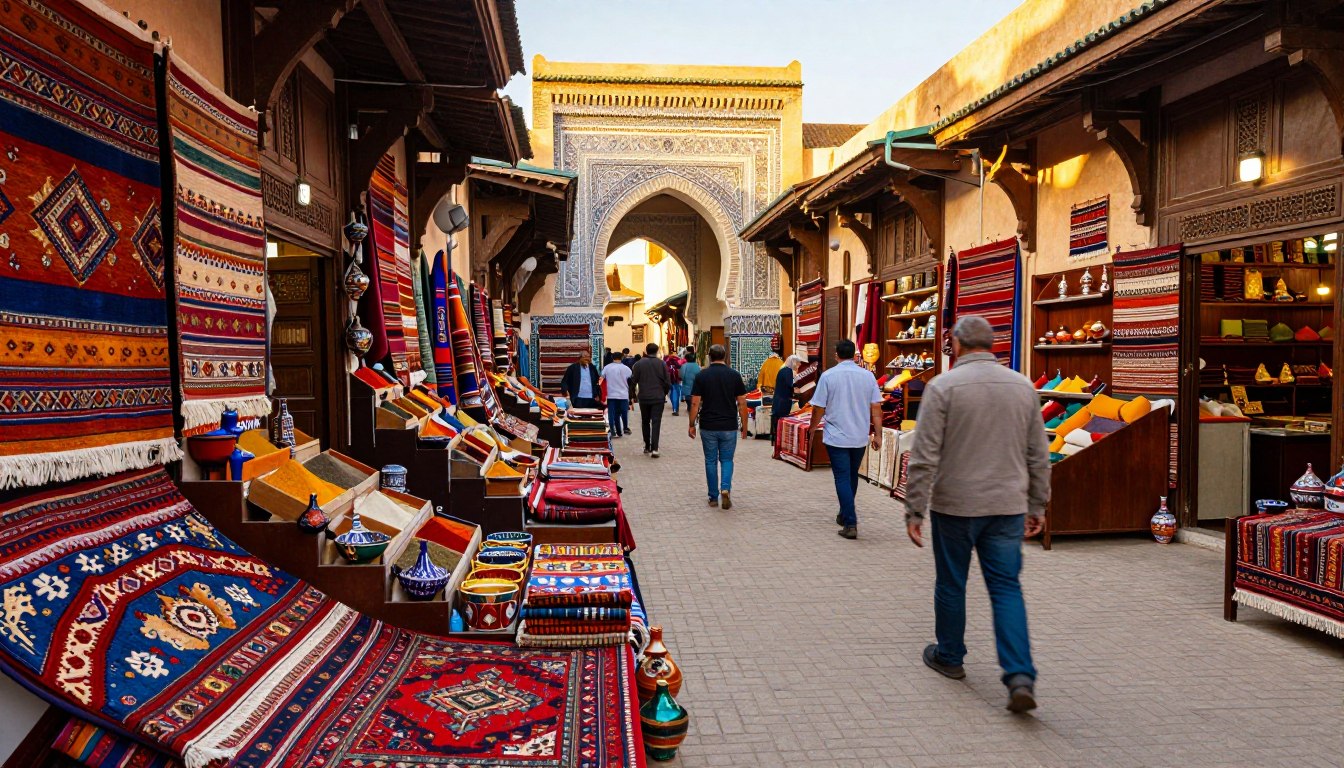
Explore the Vibrant Local Souks of Fes
Stepping into the ancient medina, I felt the air shift instantly. The scent of exotic spices mixed with tanned leather created a sensory explosion that welcomed me to Morocco.

My journey revealed exquisite handmade crafts that tell stories of many generations. I want to share how you can navigate this maze with confidence and find the best treasures.
Key Takeaways
- Navigate the historic medina with ease.
- Discover authentic handmade Moroccan crafts.
- Learn essential tips for successful bargaining.
- Experience the rich cultural heritage firsthand.
- Uncover hidden gems tucked away from main paths.
Stepping Into the Labyrinth of the Medina
The moment I stepped into the labyrinthine medina, I was enveloped by its ancient charm. The narrow alleys and bustling streets presented a sensory overload that was both exhilarating and disorienting.

The Atmosphere of the Old City
The medina’s atmosphere is a unique blend of tradition and history. As I navigated through the crowded alleys, I was struck by the vibrant colors and textures that surrounded me. The air was thick with the scent of spices and fresh bread, enticing me to explore further.
“The medina is a living, breathing entity,” as one local once said, “where every step reveals a new story.” This quote resonated with me as I wandered through the ancient streets, taking in the intricate architecture and the lively atmosphere.
Why Fes Offers a Unique Shopping Experience
Fes offers a shopping experience unlike anywhere else, deeply rooted in its history and culture. The traditional markets, or souks, are a testament to the city’s rich heritage. Here, one can find everything from exquisite handicrafts to aromatic spices, all while being immersed in the local way of life.
As I explored the bazaars in Fes, I discovered that the city’s unique shopping experience is not just about purchasing goods, but about engaging with the local culture and history. The souks are a place where tradition meets innovation, and where visitors can gain a deeper understanding of Moroccan customs and values.
Understanding the History of Local Souks or Bazaars in Places Like Fes
Delving into the history of Fes’s souks reveals a complex tapestry of trade routes, guilds, and cultural exchange. The city’s strategic location made it a crucial hub for merchants and traders from across the ancient world.
The history of these souks is intricately tied to the city’s economy and cultural identity. As I explored the medina, I discovered how the evolution of trade routes and the role of guilds in traditional markets have shaped the city’s unique character.
The Evolution of Trade Routes
The souks of Fes have been influenced by various trade routes that connected the city to distant lands. Historically, Fes was a key stopover on the trans-Saharan trade route, facilitating the exchange of goods such as spices, textiles, and metals.
| Trade Route | Goods Traded | Impact on Fes |
|---|---|---|
| Trans-Saharan | Spices, Textiles, Metals | Established Fes as a major commercial center |
| Mediterranean | Grains, Olive Oil, Ceramics | Introduced new goods and cultural practices |
The evolution of these trade routes not only brought economic prosperity but also enriched the cultural landscape of Fes.
The Role of Guilds in Traditional Markets
Guilds played a pivotal role in the traditional markets of Fes, regulating trades and maintaining quality standards. The guild system ensured that craftsmen adhered to strict guidelines, preserving the city’s artisanal heritage.
As I navigated the souks, I observed the lasting impact of guilds on the city’s commercial practices and artisanal traditions.

Navigating the Fes Shopping District Like a Pro
The Fes shopping district is a treasure trove of unique experiences, waiting to be uncovered by intrepid shoppers. As you venture into this historic medina, you’ll discover that its labyrinthine layout can be both captivating and challenging to navigate.
To make the most of your visit, it’s essential to understand the layout and key landmarks of the Fes shopping district. This knowledge will not only help you find the best shopping spots but also enhance your overall experience.
Mapping Out the Main Arteries
The main arteries of the Fes shopping district are the bustling streets that connect the various souks and markets. These thoroughfares are lined with a diverse array of shops, from traditional crafts to modern boutiques.
By familiarizing yourself with these main routes, you’ll be able to navigate the medina with greater ease and confidence. Some of the key areas to focus on include the Souk el Attarine, known for its aromatic spices, and the Souk el Henna, famous for its traditional henna products.
| Main Artery | Description | Notable Products |
|---|---|---|
| Souk el Attarine | A bustling marketplace filled with aromatic spices and fragrances. | Spices, perfumes, and traditional medicines. |
| Souk el Henna | A traditional market specializing in henna products and natural dyes. | Henna, natural dyes, and traditional cosmetics. |
Finding Your Way Through the Narrow Alleys
Beyond the main arteries, the Fes shopping district is characterized by narrow alleys and passageways that lead to hidden gems and local artisans. Exploring these areas can be a rewarding experience, as you stumble upon unique crafts and souvenirs.
To avoid getting lost, it’s helpful to use landmarks and key features to guide your way. This is where understanding the local architecture and notable features becomes invaluable.
Using Landmarks to Avoid Getting Lost
Landmarks such as historic mosques, fountains, and gateways serve as important reference points in the Fes medina. By identifying these landmarks, you can create a mental map of the area and navigate with greater ease.

Some notable landmarks to look out for include the Al-Attarine Madrasa, a beautifully crafted madrasa that serves as a hub for local artisans, and the Bab Bou Jeloud, a historic gateway that marks the entrance to the old medina.
By combining your knowledge of the main arteries, narrow alleys, and local landmarks, you’ll be well-equipped to navigate the Fes shopping district like a pro and uncover its many hidden treasures.
The Sensory Overload of the Spice Markets
Stepping into the spice markets of Fes is like entering a different world, one that is rich in sensory delights. The air is filled with the aroma of exotic spices, and the vibrant colors of the various goods on display create a visually stunning experience.
As I navigated through the crowded alleys, I was drawn to the stalls selling high-quality saffron and Ras el Hanout. Identifying the best spices requires a keen eye and a deep understanding of the market. For saffron, look for threads that are deep red in color and have a strong, earthy aroma. Ras el Hanout, which translates to “head of the shop,” is a blend of spices that can vary greatly in composition, but a good blend should have a balanced flavor and aroma.
Identifying High-Quality Saffron and Ras el Hanout
When shopping for saffron and Ras el Hanout, it’s essential to know what to look for. High-quality saffron is characterized by its deep red color and strong aroma, while a good Ras el Hanout should have a complex, balanced flavor profile.
The Medicinal Traditions of Moroccan Herbs
Moroccan herbs have been used for centuries in traditional medicine, and the spice markets of Fes offer a glimpse into this rich cultural heritage. Many of the herbs sold in the markets, such as chamomile and rosemary, have been used to treat a variety of ailments, from digestive issues to skin conditions.
As I explored the markets, I was struck by the importance of these herbs in Moroccan culture and the role they play in the country’s traditional medicine. The vendors were knowledgeable about the properties of each herb and were happy to share their expertise with customers.
Discovering Exquisite Handmade Crafts and Artisanal Goods
As I wandered through the vibrant souks of Fes, I discovered a treasure trove of exquisite handmade crafts and artisanal goods. The city’s rich cultural heritage is palpable in every intricately crafted piece, from tiles to metalwork, making Fes a paradise for those seeking authentic Moroccan souvenirs.
The artisanal goods in Fes are not just mere commodities; they are a testament to the skill and craftsmanship that has been passed down through generations. Each piece tells a story of tradition, culture, and the artisans’ dedication to their craft.
The Intricacy of Zellige Tilework
One of the most striking aspects of Fes’s artisanal scene is the Zellige tilework. These small, glazed tiles are meticulously arranged into intricate geometric patterns, adorning buildings, mosques, and even homes. The process of creating Zellige tiles is labor-intensive, involving the careful selection of colors, cutting, and arrangement into complex designs.
The beauty of Zellige tilework lies not only in its visual appeal but also in its cultural significance. It represents the blend of Islamic art and local craftsmanship, making each piece a unique reflection of Moroccan heritage.
Copper and Brass Metalwork Traditions
Fes is also renowned for its copper and brass metalwork traditions. Artisans skillfully craft a variety of items, from decorative lanterns to intricately designed trays, using techniques that have been refined over centuries. The process involves hammering, shaping, and engraving the metal to create beautiful and functional pieces.
Identifying Authentic Hand-Hammered Pieces
When shopping for copper and brass items, it’s essential to identify authentic hand-hammered pieces. Look for slight imperfections and variations in the craftsmanship, as these are indicative of traditional techniques. Authentic pieces will also have a unique character that mass-produced items lack.
By choosing hand-hammered copper and brass goods, you are not only acquiring a beautiful Moroccan souvenir but also supporting local artisans and preserving traditional craftsmanship.
The Art of Leatherwork in the Famous Tanneries
As I stepped into the historic tanneries of Fes, I was immediately struck by the vibrant colors and traditional techniques used in the leatherwork. The tanneries are a testament to the city’s rich history and artisanal skills, offering a unique shopping experience for visitors.
The tanneries of Fes have been in operation for centuries, with the Chouara Tannery being one of the most famous and oldest. It is a must-visit destination for anyone interested in witnessing traditional leatherwork techniques.
Visiting the Chouara Tannery
Visiting the Chouara Tannery is an immersive experience that allows visitors to witness the traditional methods used in leather production. The tannery is characterized by its vibrant colors, with leather hides being dyed in a variety of hues. As you explore the tannery, you will see artisans at work, using techniques that have been passed down through generations.
Selecting Quality Leather Bags and Footwear
When selecting leather bags and footwear, it is essential to look for high-quality products that are made using traditional techniques. Here are some tips to help you make the right choice:
| Type of Leather | Characteristics | Price Range |
|---|---|---|
| Full-Grain Leather | High-quality, durable, and resistant to wear and tear | $100-$500 |
| Top-Grain Leather | Strong, durable, and resistant to scratches | $50-$200 |
| Bonded Leather | Lower quality, made from leftover leather scraps | $20-$100 |
By choosing high-quality leather products, you can ensure that your purchase will last for a long time and provide a unique shopping experience.
Finding Authentic Moroccan Souvenirs to Take Home
As I wandered through the vibrant souks of Fes, I discovered an array of authentic Moroccan souvenirs that truly captured the essence of the city’s rich cultural heritage. The souks are a treasure trove of unique items, each telling a story of traditional craftsmanship and cultural significance.
The search for the perfect souvenir can be a delightful adventure, with numerous options to choose from. Two of the most captivating categories are hand-woven Berber rugs and textiles, and ceramics and pottery.
Hand-Woven Berber Rugs and Textiles
Berber rugs and textiles are not just beautiful pieces of art; they are also imbued with cultural significance. The intricate patterns and vibrant colors reflect the history and traditions of the Berber people. When selecting a Berber rug or textile, look for the quality of the wool, the intricacy of the weaving, and the uniqueness of the design.
Characteristics of Authentic Berber Rugs:
| Feature | Description |
|---|---|
| Material | High-quality wool, often hand-spun |
| Weaving Technique | Traditional techniques passed down through generations |
| Design | Intricate patterns and symbols with cultural significance |
Ceramics and Pottery Styles of Fes
Fes is renowned for its ceramics and pottery, which are characterized by vibrant glazes and intricate designs. The city’s potters have mastered the art of creating functional and decorative pieces that reflect the city’s rich cultural heritage.
Tips for Buying Ceramics and Pottery:
- Look for pieces that are handmade and uniquely crafted.
- Check the quality of the glaze and the firing technique.
- Consider the functionality of the piece, as well as its aesthetic appeal.
By focusing on these authentic cultural treasures, visitors can take home a meaningful piece of Morocco, supporting local artisans and preserving traditional crafts.
Essential Tips for a Unique Shopping Experience
A trip to the souks of Fes is a must for any traveler, but a little preparation goes a long way in making it unforgettable. To make the most of your visit to these traditional markets, it’s essential to plan ahead.
Visiting the souks at the right time can significantly enhance your shopping experience. The local souks are bustling with activity, but the crowds and heat can be overwhelming if you’re not prepared.
Best Times of Day to Visit
The best times to visit the souks are early in the morning or late in the afternoon. During these periods, the weather is more pleasant, and the crowds are relatively smaller, allowing for a more leisurely exploration of the stalls.
Early Morning: The morning is ideal for those who want to avoid the heat and see the souks come to life. It’s a great time to find fresh produce and flowers.
Late Afternoon: As the day cools down, the souks become lively again, with shopkeepers eager to make sales before closing time.
| Time of Day | Experience | Tips |
|---|---|---|
| Early Morning | Less crowded, pleasant weather | Best for fresh produce and flowers |
| Late Afternoon | Lively atmosphere, cooler weather | Ideal for bargaining and exploring |
Managing Your Budget and Currency
Managing your budget effectively is crucial when shopping in the souks. The local currency is the Moroccan dirham (MAD), and while some vendors may accept credit cards or euros, it’s advisable to have some local currency for smaller purchases.
Tips for Budgeting:
- Set a daily budget and stick to it to avoid overspending.
- Use the local currency for most transactions to avoid unfavorable exchange rates.
- Be prepared to haggle; it’s part of the shopping experience in traditional markets.
By planning your visit and being mindful of your budget, you can enjoy a unique and fulfilling shopping experience in the vibrant souks of Fes.
Mastering the Art of Haggling in Traditional Markets
As I ventured into the vibrant bazaars in Fes, I discovered that haggling is not just about reaching a mutually agreeable price, but an art form deeply rooted in the local culture. Shopping in these traditional markets requires a blend of cultural understanding, patience, and negotiation skills.
The experience of haggling is as much about the interaction as it is about the transaction. It’s a dance between the buyer and the seller, with each party trying to reach a fair price. As one shopkeeper told me,
“Haggling is not just about making a sale; it’s about building a relationship.”
The Cultural Etiquette of Negotiation
Understanding the cultural etiquette of negotiation is crucial when shopping in Fes. It’s essential to approach haggling with respect and a positive attitude. Start by building rapport with the vendor; a friendly greeting and a smile can go a long way. It’s also important to be aware of the local customs and traditions that influence the negotiation process.
For instance, being overly aggressive or confrontational can be seen as disrespectful. Instead, aim for a friendly and engaging interaction. As I learned, “The goal is to find a mutually beneficial price, not to ‘win’ the negotiation.”
Knowing When to Walk Away
One of the most critical aspects of haggling is knowing when to walk away. This can be a powerful tool in negotiations, as it signals to the vendor that you are not desperate, and they may be willing to reconsider their price. It’s a delicate balance between showing interest and maintaining your bargaining power.
As I navigated the souks, I observed that vendors often expect customers to haggle, and it’s a normal part of the transaction. By being prepared to walk away, you can often secure a better deal. It’s a lesson I learned firsthand: sometimes, the best negotiation tactic is being willing to say no.
Exploring the Hidden Courtyards and Workshops
As I ventured beyond the bustling medina of Fes, I discovered a world of hidden courtyards and workshops. These secluded areas are where the city’s artisans pour their hearts into crafting handmade crafts that are quintessentially Moroccan.
The experience is akin to stumbling upon a treasure trove, where every step reveals a new gem. “The beauty of Fes lies not just in its famous souks, but in these hidden nooks,” a local artisan once told me. It’s here that one can witness the meticulous process of creating intricate crafts that have been passed down through generations.
Watching Artisans at Work
One of the most captivating experiences is watching artisans at work. From the delicate art of pottery to the intricate weaving of Berber rugs, each craft tells a story of tradition and skill. I recall observing a potter at work in a hidden courtyard, his hands moving deftly as he shaped clay into a beautiful vase. Such moments are not just about witnessing craftsmanship; they’re about understanding the soul of Moroccan culture.
Supporting Local Cooperatives
Supporting local cooperatives is another way to immerse oneself in the artisanal world of Fes. These cooperatives are crucial for preserving traditional crafts and providing artisans with a fair platform to sell their goods. By purchasing Moroccan souvenirs directly from these cooperatives, travelers can ensure that their money is supporting local communities.
As I explored these hidden courtyards and workshops, I was struck by the warmth and hospitality of the artisans. They welcome visitors with open arms, eager to share their stories and traditions. It’s a truly enriching experience that goes beyond mere shopping; it’s about connecting with the people and the culture of Fes.
In conclusion, exploring the hidden courtyards and workshops of Fes is a journey into the heart of Moroccan craftsmanship. It’s an opportunity to witness artisans at work, support local communities, and take home unique handmade crafts that serve as a reminder of the city’s rich cultural heritage.
Culinary Delights Found Within the Bazaars in Fes
My exploration of the bazaars in Fes revealed a rich tapestry of flavors and aromas that are an integral part of the city’s cultural heritage. The fes shopping district is not just a place to shop; it’s an immersive experience that engages all your senses, including your sense of taste.
As you navigate through the narrow alleys, the enticing aromas of local street food waft through the air, tempting you to try the various delicacies on offer. The bazaars are a culinary haven, offering a wide range of traditional Moroccan dishes and sweets that are sure to delight your taste buds.
Sampling Local Street Food
One of the highlights of visiting the bazaars in Fes is the opportunity to sample local street food. From savory snacks like ma’amoul (shortbread-like cookies filled with dates or nuts) to sweet treats like ghriba (a rich, dense cake made with nuts and honey), there’s something to satisfy every craving.
Be sure to try some of the local specialties, such as msemen (a traditional Moroccan pancake) or zalabia (deep-fried doughnuts soaked in honey). These delicious treats are not only a delight to the taste buds but also offer a glimpse into the rich culinary traditions of Morocco.
Buying Traditional Moroccan Tea and Sweets
No visit to the bazaars in Fes would be complete without sampling some of the traditional Moroccan tea and sweets. Mint tea, in particular, is an integral part of Moroccan culture, and you’ll find it being served in almost every shop and stall.
In addition to tea, the bazaars offer a wide range of traditional Moroccan sweets, such as baklava and makroud (a date-filled pastry). These sweet treats make perfect souvenirs, and you can find them packaged in beautifully decorated boxes or tins.
As you explore the fes shopping district, be sure to take some time to indulge in the local culinary delights. Whether you’re sampling street food or buying traditional tea and sweets, you’re sure to leave with a newfound appreciation for the rich cultural heritage of Fes.
Cultural Treasures Beyond the Main Thoroughfares
Beyond the bustling main streets, Fes conceals a treasure trove of cultural riches waiting to be unearthed. As you explore the medina’s lesser-known paths, you’ll discover a world that is both authentic and untouched by mass tourism. The experience is akin to uncovering a hidden gem, where every step reveals a new facet of Fes’s rich cultural heritage.
Finding Antique Treasures and Vintage Finds
The medina is a haven for those seeking unique shopping experiences, with its array of antique treasures and vintage finds. As I navigated the narrow alleys, I chanced upon small, family-run shops that were filled with an assortment of artifacts, each telling a story of Fes’s past. From intricately crafted jewelry to antique furniture, every item is a testament to the city’s artisanal legacy.
To find these hidden gems, one must be willing to venture off the beaten path. It’s about embracing the uncertainty of exploration and being open to discovering the unexpected. The thrill of the hunt is part of the fun, and the rewards are well worth the effort.
The Significance of Traditional Clothing
Traditional clothing plays a significant role in Fes’s cultural identity, reflecting the city’s history and values. The intricate designs and craftsmanship that go into creating these garments are a testament to the skill and dedication of local artisans. From the elegant jellabas to the vibrant kaftans, each piece of clothing is imbued with cultural significance.
When exploring the medina, you’ll have the opportunity to see these traditional garments up close and even purchase them as a reminder of your visit. Understanding the significance of these clothes adds a deeper layer to your shopping experience, making it more than just a transaction.
Respecting Local Customs and Etiquette While Shopping
As I wandered through the vibrant souks of Fes, I realized that respecting local customs was key to a fulfilling shopping experience. Shopping in traditional markets like those found in Fes requires a certain level of cultural awareness and sensitivity.
The medina, with its labyrinthine alleys and bustling markets, is not just a place to shop but an integral part of Moroccan culture and heritage. Understanding and respecting local customs can significantly enhance your shopping experience.
Dress Codes for the Medina
Dressing modestly is essential when visiting the medina and its souks. Loose, comfortable clothing that covers your shoulders and knees is recommended. Not only is this a sign of respect for local customs, but it will also help you blend in and feel more at ease among the crowds.
Avoid wearing revealing clothing or anything that might be considered offensive. For women, a scarf can be a useful accessory to cover the shoulders or head if needed.
Interacting Respectfully with Shopkeepers
Interacting with shopkeepers in Fes requires a combination of respect and negotiation skills. Starting with a greeting in Arabic, such as “As-salamu alaykum” (peace be upon you), can set a positive tone. Be prepared to engage in friendly conversation before diving into bargaining.
It’s also important to be patient and not rush the process. Building a rapport with shopkeepers can lead to a more enjoyable and successful shopping experience. Remember, haggling is an art form in traditional markets, and it’s all part of the fun.
Conclusion
As I reflect on my journey through the bazaars in Fes, I am reminded of the city’s rich cultural heritage and the unique shopping experiences it offers. The local souks are a treasure trove of sensory delights, from the vibrant colors and aromas of the spice markets to the intricate craftsmanship of the artisans.
Exploring the souks is not just about shopping; it’s an immersive experience that allows visitors to connect with the local culture and history. Whether you’re navigating the narrow alleys, haggling over prices, or simply taking in the sights and sounds, the bazaars in Fes are a must-visit destination for any traveler.
My hope is that this article has inspired you to plan your own visit to Fes and experience the magic of its local souks. With its unique blend of tradition and modernity, Fes is a city that will leave you with unforgettable memories and a deep appreciation for the beauty of Moroccan culture.
FAQ
What is the best time of day to explore the local souks in the Fes shopping district?
I recommend heading out early in the morning, around 9:00 AM, before the midday heat and the largest crowds arrive. This is when the shopkeepers are setting up and the atmosphere is a bit more relaxed. Alternatively, late afternoon is a wonderful time to experience the traditional markets as the light softens, though keep in mind that some smaller artisanal workshops might begin to close by dusk.
How can I find my way through the labyrinthine alleys of the bazaars in Fes without getting lost?
It’s incredibly easy to lose your bearings in the narrow streets, but I always suggest using major landmarks like the Al-Attarine Madrasa or the Kairaouine Mosque as your guideposts. If you do get turned around, look for the two main arteries, Tala’a Kebira and Tala’a Sghira; following these downward usually leads you deeper into the medina, while following them upward will eventually bring you back to the famous blue gate, Bab Boujloud.
What should I look for when buying handmade crafts, specifically leather at the Chouara Tannery?
When I’m shopping for leather, I always check for a natural, earthy scent—if it smells like chemicals or plastic, it’s likely not the real deal. High-quality, authentic pieces from the Chouara Tannery are incredibly supple. I also look for slight natural variations in the grain and hand-stitched details, which are hallmarks of genuine Moroccan souvenirs rather than mass-produced factory goods.
Are there specific Moroccan souvenirs that are unique to the city of Fes?
Absolutely! Fes is world-renowned for its “Fassi” blue and white ceramics and its intricate Zellige tilework. I also highly recommend looking for hand-hammered copper trays and kettles or a pair of traditional yellow leather slippers known as babouche. These cultural treasures are deeply rooted in the city’s history and offer a truly unique shopping experience you won’t find anywhere else.
What is the proper etiquette for haggling in the traditional markets?
In Fes, negotiation is a friendly social interaction, not a confrontation. I typically start by offering about 40% to 50% of the initial asking price and then work my way up slowly. I’ve found that maintaining a smile and a lighthearted attitude goes a long way. If the price doesn’t reach a point I’m comfortable with, I politely thank the shopkeeper and walk away—often, they might call me back with a better offer!
How can I ensure I am supporting local artisans while shopping in Fes?
I make a point to seek out hidden workshops and local cooperatives, such as the various weaving associations located near the Nejjarine Museum. Purchasing directly from the craftsmen or through verified cooperatives ensures that your money directly supports the local community and helps preserve these ancient trade traditions for future generations.
What should I wear while visiting the bazaars in Fes to be respectful of local customs?
Since the medina is a deeply traditional and religious environment, I always choose to dress modestly. For me, this means wearing clothing that covers my shoulders and extends below my knees. Not only is this a sign of respect toward the local shopkeepers and residents, but it also helps me feel more integrated into the local culture as I navigate the crowded local souks.
Can I find authentic culinary treasures to take home from the spice markets?
Definitely. I never leave Fes without picking up some fresh Ras el Hanout, a complex spice blend that varies from shop to shop. Look for vendors who have high turnovers to ensure the spices are fresh. I also love buying local honey, dried rosebuds, and authentic Moroccan saffron from Taliouine, which are perfect for recreating the flavors of Morocco in my own kitchen.